
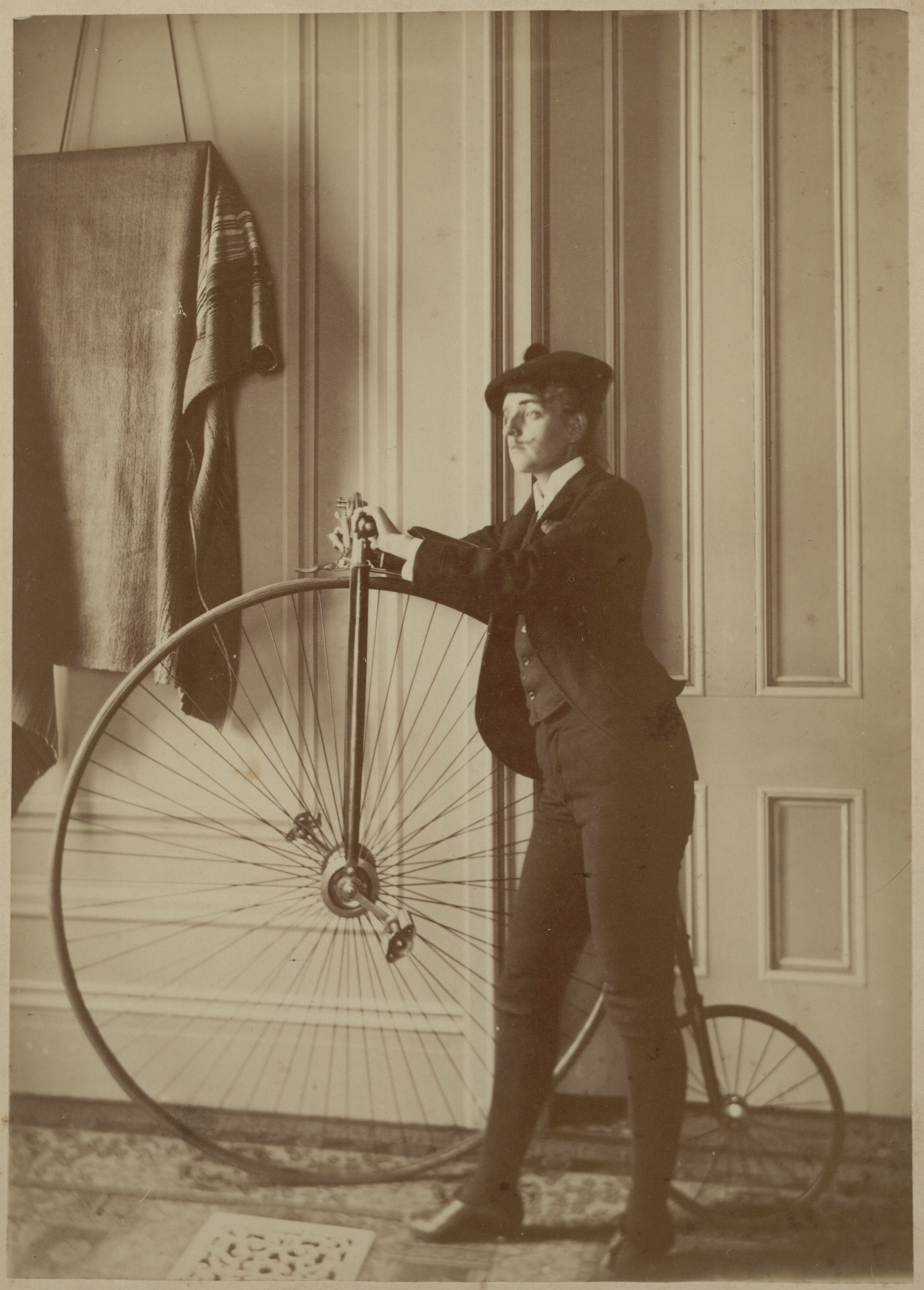
Fannie Johnston - Self-portrait.
FANNIE JOHNSTON

(1864 – 1952)
ART ::: PHOTOGRAPHER :::
The Phantom in the Frame
Frances Benjamin Johnston is not a household name, which is strange given how much of early America she quietly fixed into memory. Born in 1864, she came of age alongside photography itself, when the medium was still proving it could do more than decorate parlors. Johnston treated the camera as a serious instrument—observant, disciplined, unsentimental—and built a career that lasted nearly half a century. At a time when women were rarely granted professional authority behind the lens, she worked steadily, methodically, and without theatrics, helping photography become both a public record and a cultural language.
Her portraits are the most immediate way into her work. Johnston photographed presidents, writers, reformers, and artists, but she was especially attuned to personality—to how people performed themselves when the world was watching. Her image of Alice Roosevelt Longworth, the sharp-witted daughter of Theodore Roosevelt, captures an early moment of modern celebrity: self-aware, ironic, uninterested in deference. Johnston didn’t sentimentalize Alice or turn her into spectacle; she let her intelligence and defiance register plainly. The photograph lasts because it feels contemporary—two women understanding visibility not as flattery, but as something to be handled carefully.
Beyond portraiture, Johnston’s work expands into the structures and systems that shape everyday life. In partnership with Mattie Edwards Hewitt, she helped define architectural and garden photography in the United States, producing clear, rigorous images of Southern estates, historic buildings, and interiors that later became essential to preservation history. At the same time, she created extensive photographic series documenting African American and Native American life at the turn of the 20th century—work shaped by the assumptions of its era, yet notable for its seriousness and insistence on inclusion in the visual record. Johnston may not be widely known today, but much of what we think early America looked like passed, quietly and decisively, through her eye.