
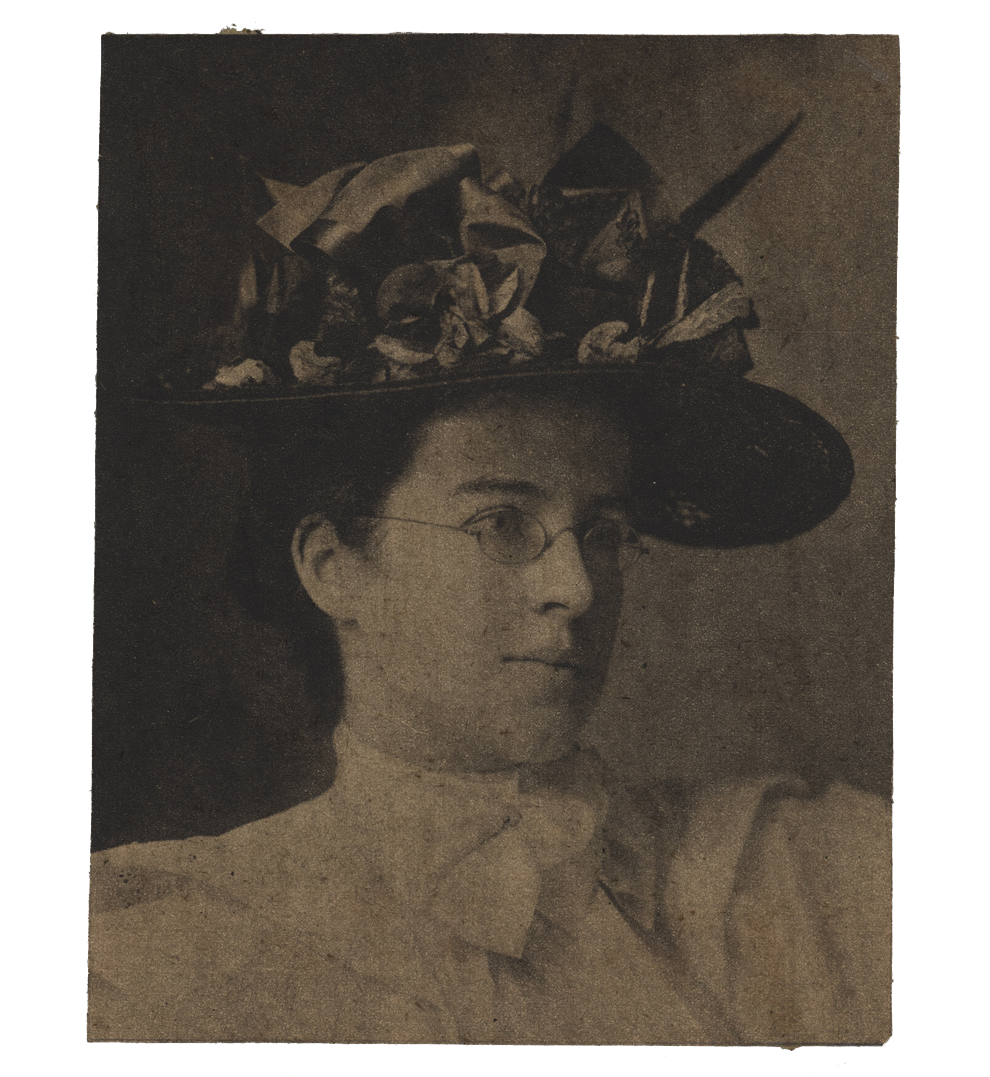
LOUISE IMOGEN GUINEY

(1861 - 1920)
BOOKS ::: POET :::
Boston Visionist. Essayist. Ralph Adams Cram. F. Holland Day.
Louise Imogen Guiney's 1893 On the Delights of an Incognito Reimagined (2026 rewrite)
Perfect happiness isn’t hiding in some impossible middle ground. It lives at the extremes: either being fully seen and recognized, or not seen at all. The trouble starts when you’re half-known—tracked, tagged, vaguely familiar to strangers who think they understand you. That’s the exhausting zone. Anyone who’s ever stood on a stage knows the rush of being watched on purpose. But the deeper pleasure—the kind that resets the nervous system—arrives when the spotlight snaps off and you’re alone somewhere quiet, stripped of name and expectation, real only to yourself and maybe a dog who isn’t impressed.
There’s a particular romance in being mistaken for nobody once you’ve been somebody. History is full of people who tasted this and never forgot it: rulers, writers, public figures who found relief not in praise but in misrecognition. To pass unnoticed, to hear your own name spoken without consequence, to move through the world without explanation—this isn’t failure, it’s luxury. Identity is work. Anonymity is rest. What we call “privacy” now used to be understood as dignity.
Some people—often the most perceptive ones—choose obscurity not because they lack ambition, but because they value clarity. They travel light. They observe without interrupting. They understand systems without inserting themselves into them. They don’t confuse visibility with relevance. In a culture that treats constant self-disclosure as virtue, they practice a quieter intelligence: knowing without being known, seeing without being searchable, living without a running commentary.
There is nothing more radical, now, than walking away from an open door. To pass the warm, lit room where you are expected, and keep going—unnoticed, unrecorded, free of performance. In a world built on surveillance, branding, and compulsory presence, incognito is not disappearance; it’s recovery. To be anonymous is not to be less—it is to be briefly whole.
Louise Imogen Guiney is one of those figures history quietly misplaced—not because she lacked talent or influence, but because she belonged to a Boston that chose interiority over noise. Reading her work now requires a small act of recalibration. There are no manifestos, no shock tactics, no easy entry points. Her poems and essays assume patience, attention, and a belief that beauty and rigor matter even when no one is applauding. Guiney wrote as if the future might someday catch up to her, but she never chased it. She trusted form, devotion, and clarity—values already slipping out of fashion as modernism revved its engines.
This sensibility placed her naturally within the orbit of the Boston Visionists, an informal late-19th-century constellation of poets, artists, publishers, and architects who resisted realism, industrial speed, and American utilitarianism. The Visionists were not loud radicals; they were aesthetic heretics, drawn to symbolism, medievalism, spiritual intensity, and the idea that art should elevate rather than merely reflect the world. Guiney fit this ethos perfectly. Her work looked backward—to older English verse forms, Catholic mysticism, and moral seriousness—not out of nostalgia, but as a deliberate refusal of cultural flattening. She was never trying to be modern; she was trying to be exact.
At the center of this circle stood F. Holland Day, photographer, publisher, and aesthetic provocateur, who recognized in Guiney a kindred seriousness. Through Day’s publishing ventures and salons, Guiney’s work circulated among those who believed art was a calling, not a commodity. Yet even within this visionary milieu, she remained distinctly herself—less theatrical than Day, less interested in spectacle than in discipline. That may be why she slipped from popular memory. The Boston Visionists were eventually eclipsed by louder movements and flashier myths, but Guiney’s writing endures as a quiet countercurrent: proof that American culture once made room for precision, restraint, and spiritual intelligence. To encounter her now is not to rediscover a forgotten celebrity, but to overhear a conversation that history chose to stop listening to.