
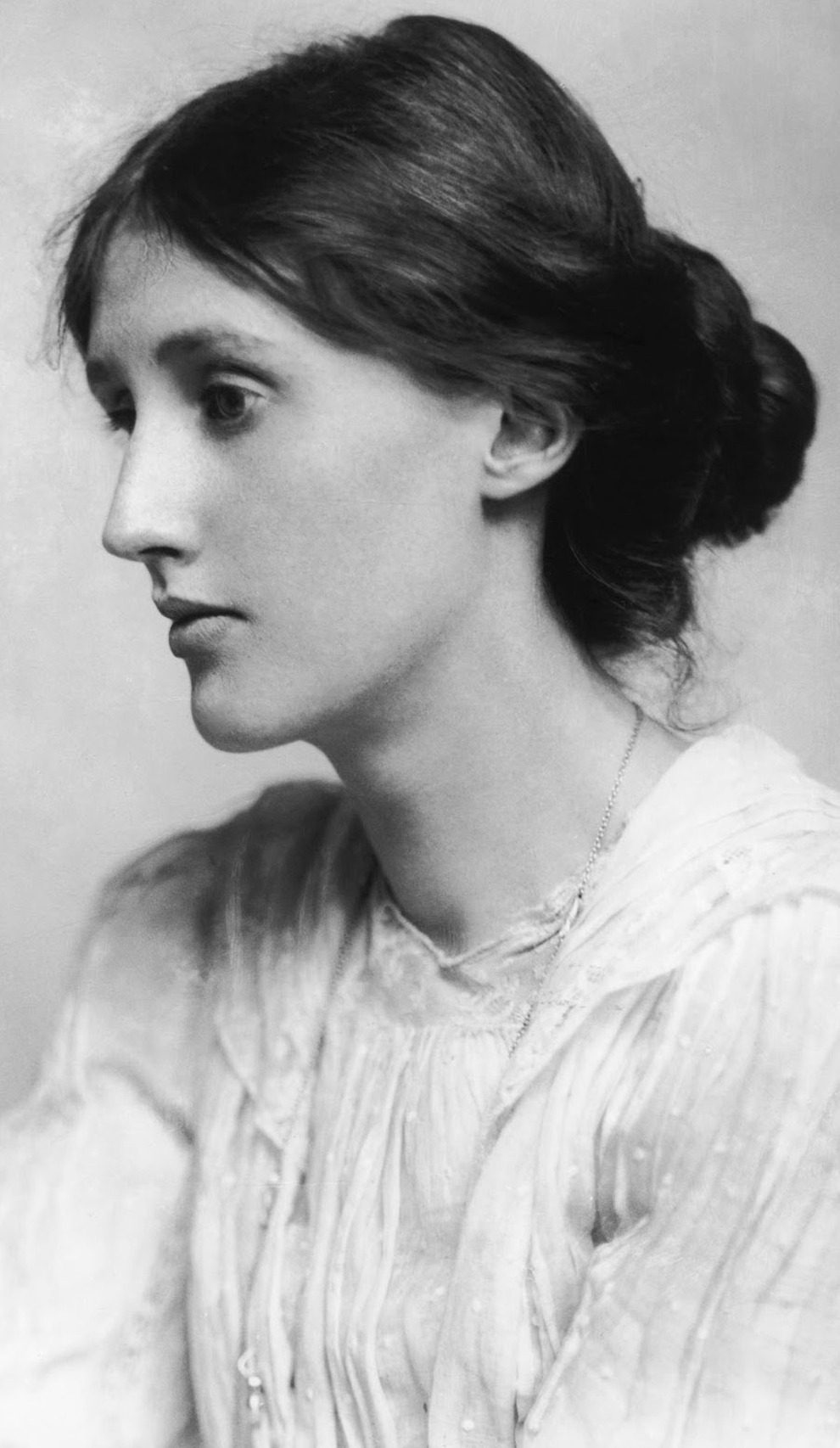
VIRGINIA WOOLF
(1882 - 1941)
BOOKS ::: AUTHOR :::
somewhere from a dying sun.
the figure walked intently.
up upon the overrun.
forward so contently.
stopping so sporadically.
bending by the wayside
picking up the rocks and stones.
strapped down to the waistline.
beeline to the south bank.
crystal muddy sea.
one small step for mankind
one giant step for me
- kk - virginia woolf - ether - download here
Virginia Woolf was one of the great architects of modern literature, a writer who changed not just what novels could say, but how they could think. Born in London in 1882, she was part of the Bloomsbury Group, a loose constellation of writers, artists, and thinkers who rejected Victorian rigidity in favor of experimentation, honesty, and intellectual freedom. Woolf wrote novels like Mrs Dalloway, To the Lighthouse, and Orlando, and essays such as A Room of One’s Own, which argued—quietly but forcefully—that women needed space, money, and freedom to create. Her work abandoned linear plots in favor of inner life, treating thought, memory, and perception as the real drama of being human.
Her life, however, was marked by recurring mental illness, exacerbated by personal loss, war, and the pressures of a mind that never truly rested. In March 1941, as London endured the Blitz and Woolf feared another breakdown she might not survive, she filled her pockets with stones and walked into the River Ouse near her home in Sussex. She left letters for her husband Leonard that were clear-eyed, loving, and devastatingly calm. Her death was not romantic or symbolic—it was an act of exhaustion, made by someone who understood her own fragility too well. Yet it did not eclipse her work; it sharpened the urgency with which later generations returned to it.
For author Michael Cunningham, Woolf was not a distant modernist icon but a living force. His novel The Hours reimagines Mrs Dalloway across three eras, binding Woolf herself, a mid-century housewife, and a contemporary New Yorker into a single emotional system. Cunningham has written that Woolf taught him how fiction could move—not through spectacle, but through attention; not through plot, but through consciousness. In his hands, Woolf becomes a relay point rather than a monument: proof that the novel can still be elastic, intimate, and morally alert. Through Cunningham, her revolution continues on the silver screen with Nicole Kidman, Julianne Moore, and Meryl Streep.