
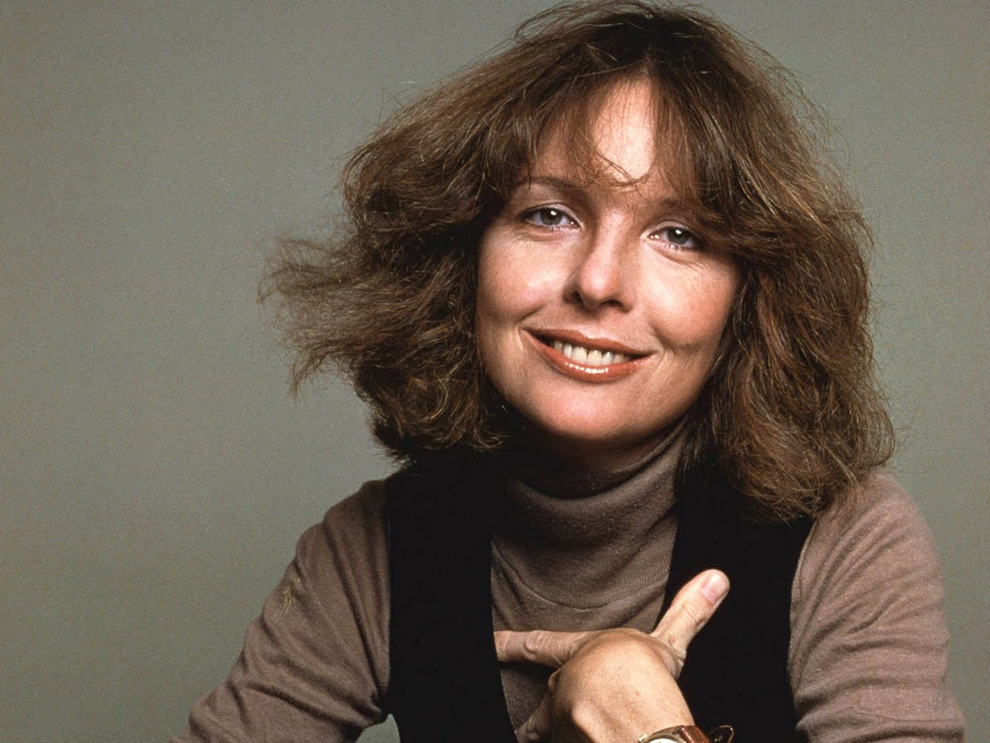
DIANE KEATON

(1946 - 2025)
FILM ::: ACTRESS :::
Diane Keaton arrived in American culture sideways—awkward, funny, cerebral, and unmistakably herself. Born Diane Hall, she trained as an actor but thought like a writer, approaching performance as character construction rather than glamour. Early on, she gravitated toward material that prized voice and interiority, often collaborating closely with directors and shaping roles from the inside out. That instinct—to co-author a performance—became one of her defining traits and quietly shifted expectations of what a leading woman could be.
Her work with Woody Allen marked a turning point in screen acting. In Annie Hall, Keaton didn’t just star—she rewired romantic comedy. The film’s rhythms, self-consciousness, and emotional honesty mirrored her own sensibility, and the character’s style, speech, and intelligence bled directly into the culture. Around the same time, she moved effortlessly between worlds: as Kay Adams in The Godfather opposite Al Pacino, she embodied moral witness inside a masculine epic; in Looking for Mr. Goodbar and Reds, she tackled sexual politics, loneliness, and ideology without softening the edges. Her portrayal of Louise Bryant in Reds fused politics and intimacy, placing a woman’s consciousness at the center of revolutionary history.
What makes Keaton endure is range without erasure. She aged into roles that remained sharp, funny, and emotionally complex—Marvin’s Room, Something’s Gotta Give—without surrendering agency or eccentricity. Offscreen, her intellectual kinship with writers like Joan Didion reflects the same throughline: women thinking in public, refusing simplification. Keaton’s legacy isn’t just a list of iconic films; it’s a way of being onscreen—idiosyncratic, thoughtful, collaborative—that expanded the vocabulary of American performance and made room for women who didn’t want to play by inherited rules.