
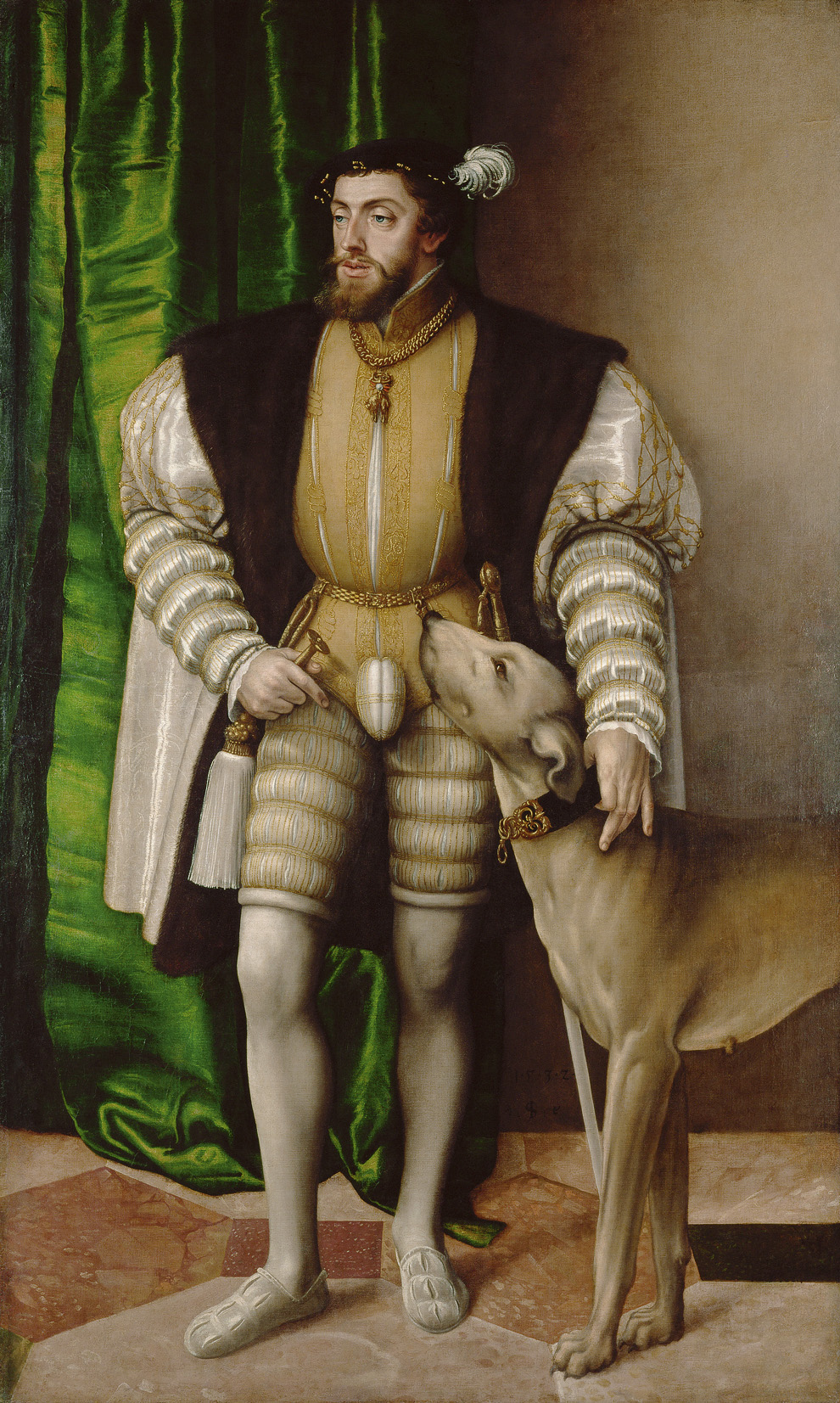
 Charles V by Jakob Seisenegger
 CHARLES V IS ELECTED HOLY ROMAN EMPEROR: 1519
MUCHOLAPKA ::: POLITICS :::
When nineteen-year-old Charles V was elected Holy Roman Emperor on June 28, 1519, he inherited the greatest empire in Europe. His kingdoms stretched from Spain and the Netherlands to Austria, Italy, and the newly discovered Americas. Yet despite commanding vast armies and unimaginable wealth, Charles quickly discovered that the greatest challenge to his authority was not another king but an idea. Across Central Europe, the teachings of Jan Hus and the growing Protestant Reformation questioned whether emperors and popes could dictate matters of conscience. The struggle between power and belief would define his reign and reshape the continent.
Nowhere were those questions more deeply rooted than in Bohemia. More than a century before Martin Luther, Jan Hus had challenged religious authority from Prague, and his execution ignited a movement that refused to disappear. During Charles V's lifetime, the Czech lands stood at the crossroads of empire, faith, and national identity. The arguments that had begun in Bohemia continued to echo through the Letter of Majesty, the Defenestration of Prague, and the Thirty Years' War, making Prague one of Europe's enduring battlegrounds over freedom of conscience.
More than four centuries later another empire arrived believing it could finally break the Czech spirit. In March 1939 Adolf Hitler occupied Prague, Alphonse Mucha was arrested by the Gestapo, and Charles Richard Crane—the American philanthropist whose support had helped create modern Czechoslovakia and finance Mucha's Slav Epic—died only months later. It seemed the story had reached its tragic conclusion. It had not. Empires rose and fell. The Czech nation endured. Charles V ruled one of history's greatest empires. Hitler commanded one of its darkest. Both eventually became chapters in a much older story—the remarkable persistence of Bohemia itself.
The history of Bohemia is not the story of the empires that ruled it. It is the story of the people who outlived them.