
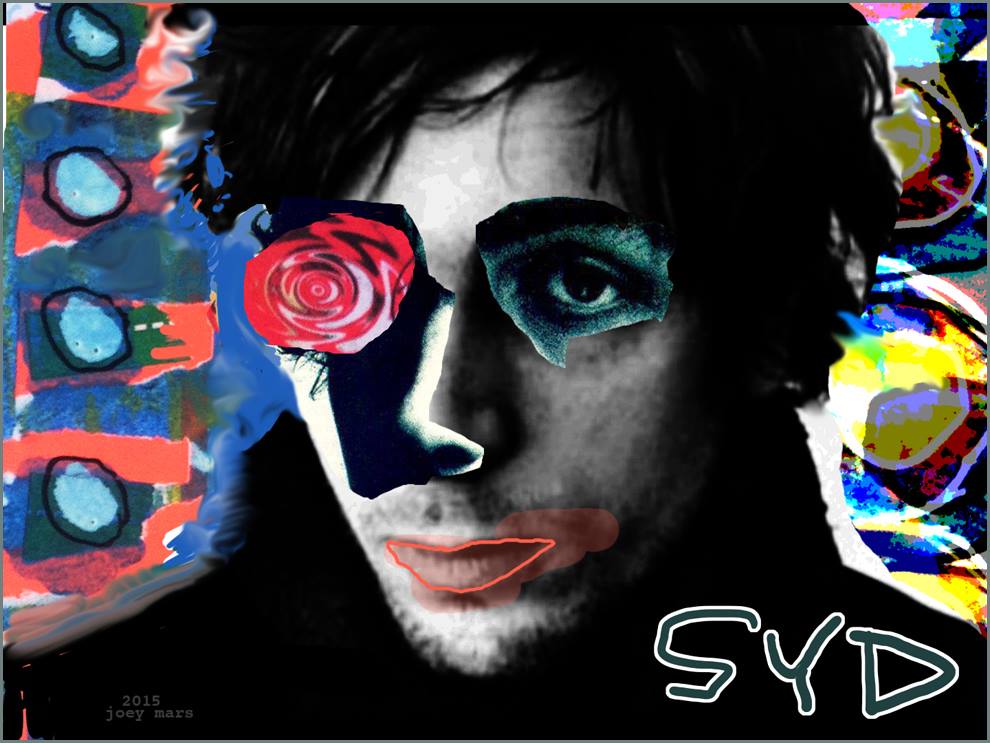


SYD BARRETT
(1946 – 2006)
MUSIC ::: PSYCHEDELIC :::
Syd Barrett was the original conjurer of Pink Floyd’s early magic — a poet-musician who spun galaxies from guitars and ambiguity from melody. Born Roger Keith Barrett in 1946, he emerged from the London underground with a peculiar mix of English pastoral charm and jittery, hallucinatory intuition. Barrett wasn’t merely a guitarist; he was a mythmaker, a rare figure who could make six strings feel like a portal. At a time when rock was still learning its grammar, he spoke fluently in color, dream logic, and electric suggestion — the perfect voice for a band about to redraw the psychic map of popular music.
The Piper at the Gates of Dawn, released in 1967, arrived at the height of the Summer of Love and alongside London’s UFO Club scene, where music, light, and altered perception blurred into a single experience. Named after a mystical chapter of The Wind in the Willows, the album captured a sense of childlike wonder shot through with menace and cosmic curiosity. Barrett’s songs — from the elastic snap of “Lucifer Sam” to the nursery-rhyme psychedelia of “Bike” — felt unmoored from conventional songwriting. His guitar didn’t solo so much as rearrange space, using echo, feedback, and repetition to dissolve the boundary between melody and atmosphere. Piper became inseparable from its moment not because it referenced outer space, but because it sounded like inner space made audible.
Barrett’s greatness lay in visionary vulnerability. He played not to dominate or dazzle, but to externalize states of mind most musicians couldn’t yet articulate. That sensitivity — intensified by psychedelics, pressure, and an unforgiving industry — proved unsustainable. By 1968, Pink Floyd moved forward without him, and Barrett withdrew into a quieter, largely private life. What remains is a brief, incandescent body of work that permanently altered the trajectory of rock music. Piper endures not as nostalgia, but as proof that true originality often appears unarmored — brilliant, strange, and fleeting — leaving a wake that others spend decades trying to follow.