
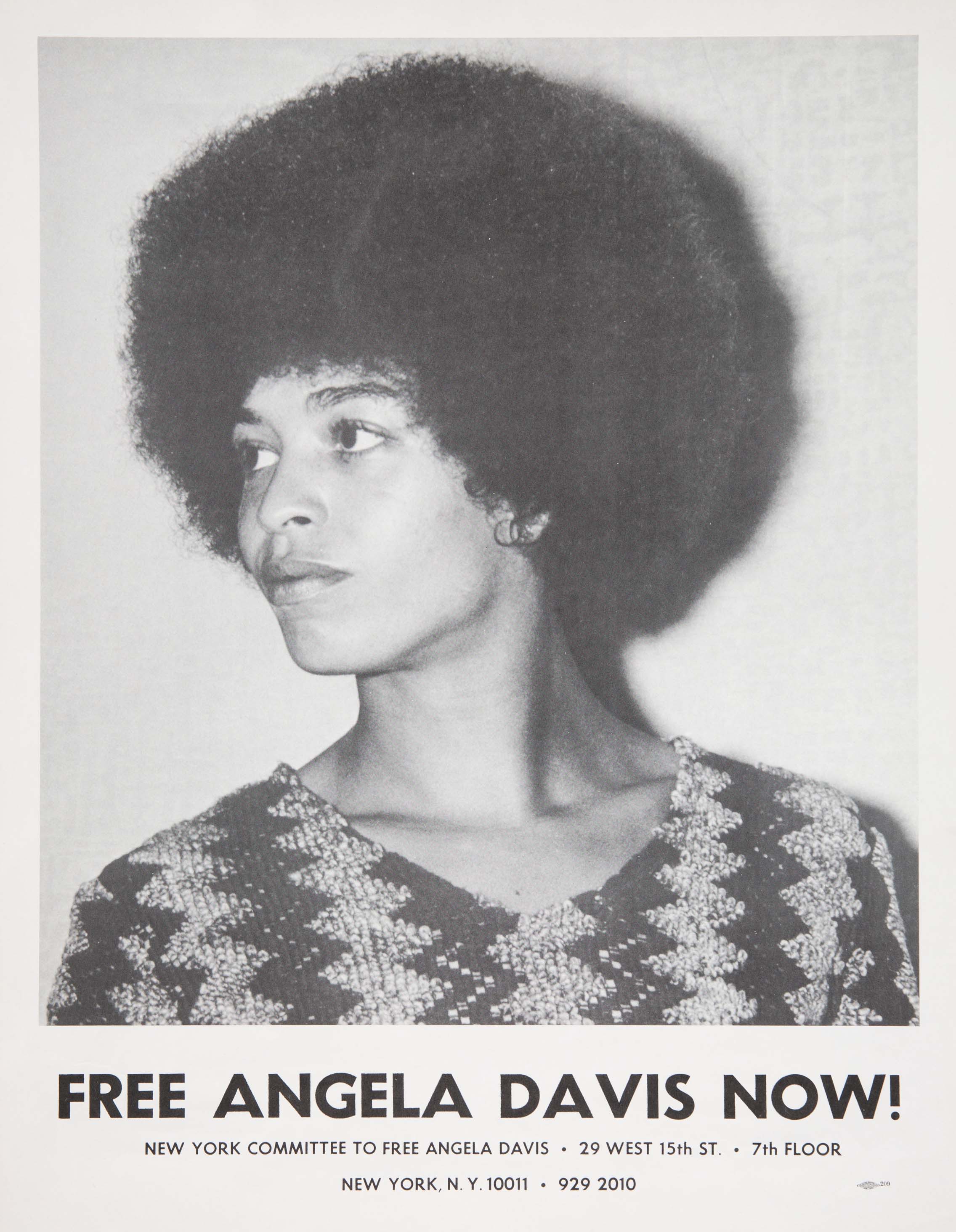
ANGELA DAVIS

(1944 - )
AUTHOR ::: ACTIVIST :::
Angela Davis is one of the most consequential intellectuals and activists of the 20th and 21st centuries. Born in Birmingham, Alabama, in 1944, she came of age amid bombings, segregation, and the organized terror of Jim Crow. A philosopher trained under Herbert Marcuse, Davis became a global figure through her work as a scholar, organizer, and abolitionist—challenging prisons, racial capitalism, and state violence long before those critiques entered the mainstream. Her arrest and imprisonment in 1970, followed by an international campaign for her freedom and ultimate acquittal, transformed her into both a political prisoner and a symbol of resistance whose influence continues through teaching, writing, and movement-building.
Decades later, Davis confronted a different kind of reckoning with history. On Finding Your Roots, she learned that her ancestry includes both enslaved people and enslavers, including white ancestors whose lives intersected with her Black family through coercion, secrecy, and survival in the Jim Crow South. Among those revelations was a direct genealogical link to William Brewster, a leader of the Plymouth Colony. Davis’s response—visible shock and discomfort—was telling. The discovery didn’t rewrite her politics; it exposed the deep, often violent entanglements that shape American lineage itself.
That connection reaches back to November 1620, when the Mayflower anchored in Provincetown Harbor, its passengers stepping ashore before moving on to Plymouth. Provincetown, often remembered as the fragile beginning, becomes something more complicated in this light—not a symbol of origin, but of collision. That Angela Davis’s bloodline passes through that harbor underscores the paradox at the heart of American history: liberation and oppression sharing the same shoreline. Her life’s work does not reconcile that contradiction—it insists we look directly at it, and then decide what justice demands next.