
THE GREAT MOLASSES FLOOD

JANUARY 15, 1919
BOSTON 400
On a cold January afternoon in Boston’s North End, a steel tank holding more than two million gallons of molasses ruptured without warning and unleashed one of the strangest disasters in American history. A brown tidal wave—15 feet high in places—raced through the streets at an estimated 35 miles per hour, crushing buildings, bending iron girders, and carrying horses, wagons, and people like toys. The absurdity is unavoidable: a city drowned not by water or fire, but by sugar. It sounds like folklore, a tall tale invented to test credulity. And yet it happened, exactly as described, in broad daylight, in a modern American city.
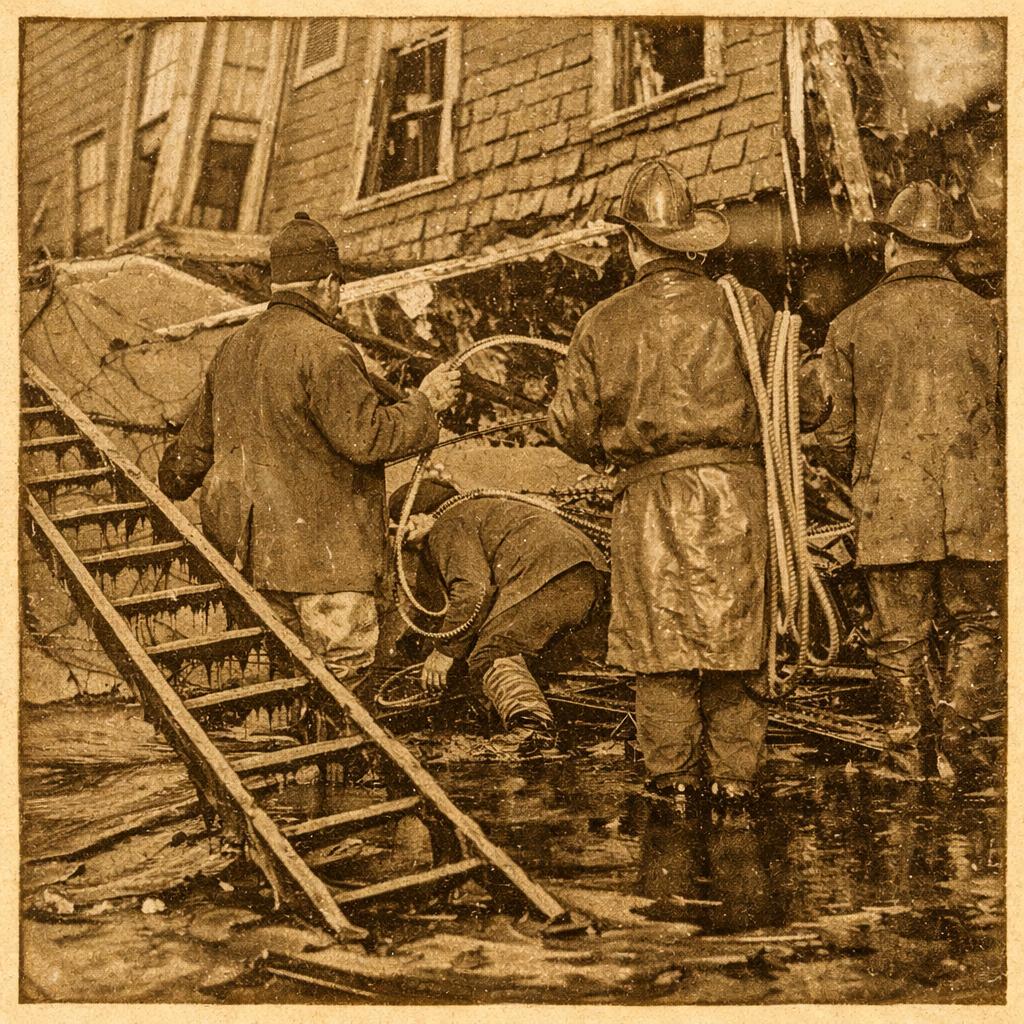
But the horror cuts through the novelty almost immediately. Molasses doesn’t flow like water—it clings, suffocates, and hardens as it cools. People trapped in it struggled and sank, their movements slowing as the syrup thickened around them. Twenty-one people were killed; more than 150 were injured. Rescue workers waded through the sticky wreckage for days, sometimes hearing cries that faded as the molasses set like cement. The smell lingered for weeks, embedding itself in the bricks and cobblestones. Long after the streets were washed clean, Bostonians swore they could still smell sweetness rising from the pavement on hot days.
The Molasses Flood endures because it sits at the crossroads of absurdity and indictment. It exposed the human cost of corporate negligence—corners cut, warnings ignored, profit placed above safety—and helped reshape laws around industrial accountability. For Boston, it is a reminder that history isn’t only forged in grand speeches or heroic battles, but also in surreal catastrophes that reveal how fragile “progress” really is. As Boston approaches its 400th year, the flood stands as a darkly symbolic moment: a city literally overwhelmed by excess, where comedy and tragedy collided in a way only history can manage.