
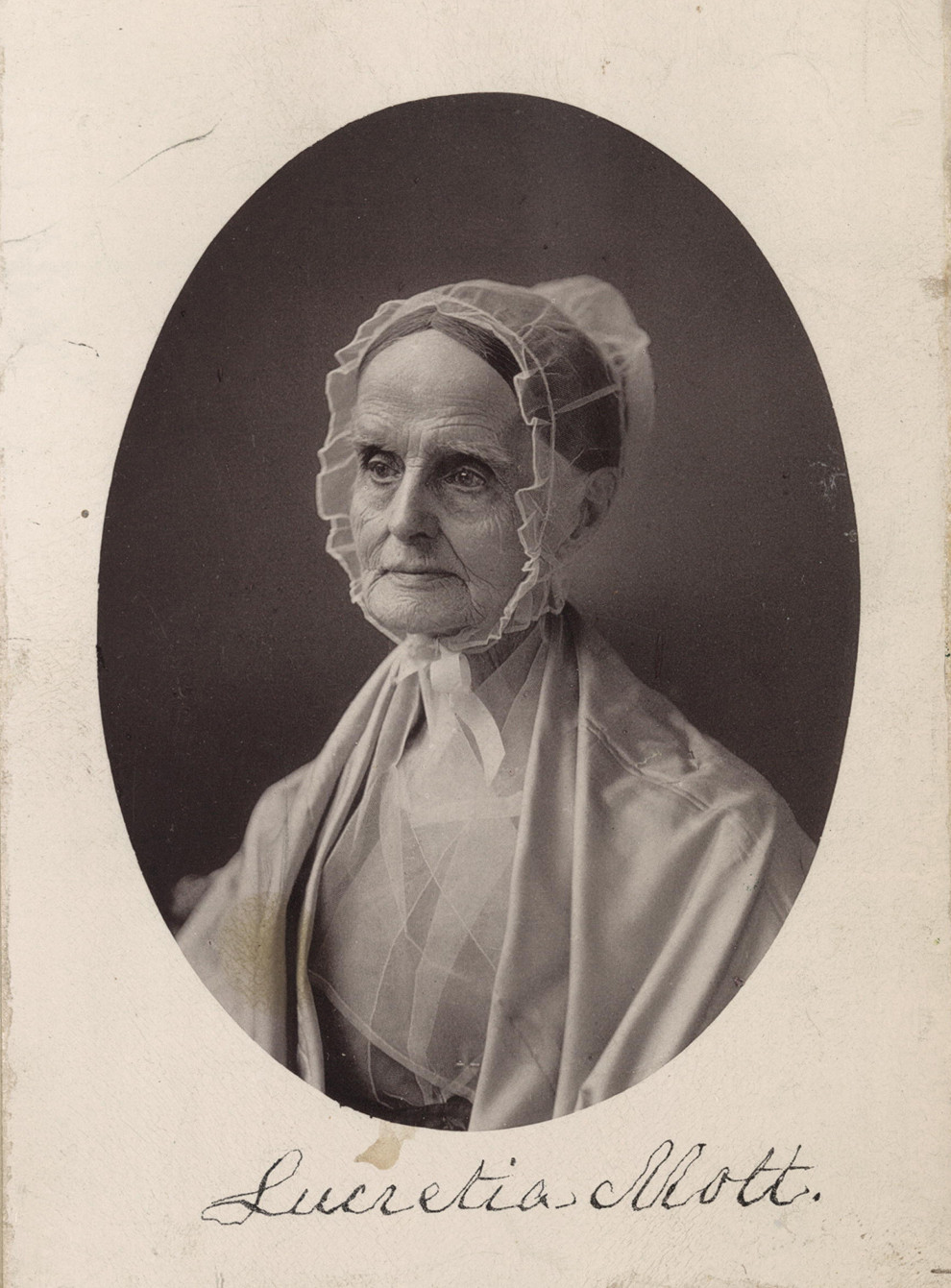
LUCRETIA MOTT

(1793 - 1880)
POLITICS: ::: ACTIVIST :::
Lucretia Mott stands at the crossroads of American conscience—an abolitionist, traveling Quaker minister, and relentless advocate for women’s and minority rights long before those causes had names people took seriously. Born Lucretia Coffin on Nantucket, a Quaker stronghold where men went to sea and women ran the island, she grew up inside a lived philosophy of equality. The Society of Friends taught that all people carried divine light, and Mott never wavered from that belief, even when the nation did. As she famously warned, “The world has never yet seen a truly great and virtuous nation because in the degradation of woman the very fountains of life are poisoned at their source.”
Mott’s activism was not abstract—it was embodied. She spoke publicly against slavery at a time when women speaking at all was considered scandalous, recounting tales of slave ships and human suffering with moral clarity that unsettled polite society. In 1827, she and her husband James Mott followed Elias Hicks during the Great Separation, rejecting evangelical orthodoxy in favor of a more radical, inward faith rooted in equality and social justice. Her causes expanded naturally: abolition, women’s rights, prison and school reform, temperance, peace, and religious tolerance were not separate issues to Mott, but part of the same moral ecosystem.
The flashpoint came in 1838, when Mott helped organize a three-day anti-slavery convention at Philadelphia’s Pennsylvania Hall, dedicated to free speech. Mobs gathered. The hall was burned to the ground. Mott walked home through the chaos, unshaken. Two years later, barred from full participation at the 1840 World Anti-Slavery Convention, she recognized the deeper injustice at work. That exclusion led directly to Seneca Falls in 1848, where Mott stood beside Elizabeth Cady Stanton in drafting the Declaration of Sentiments, a radical rewriting of American democracy itself. With Lucretia Mott, the fight for abolition and the fight for women’s rights became inseparable—once stitched together, never to be undone.